What “type” actually describes
A mattress type describes how it is built: what the support core is made of, and what sits on top of it. It says nothing directly about firmness. You can buy a soft innerspring and a very firm all-foam mattress.
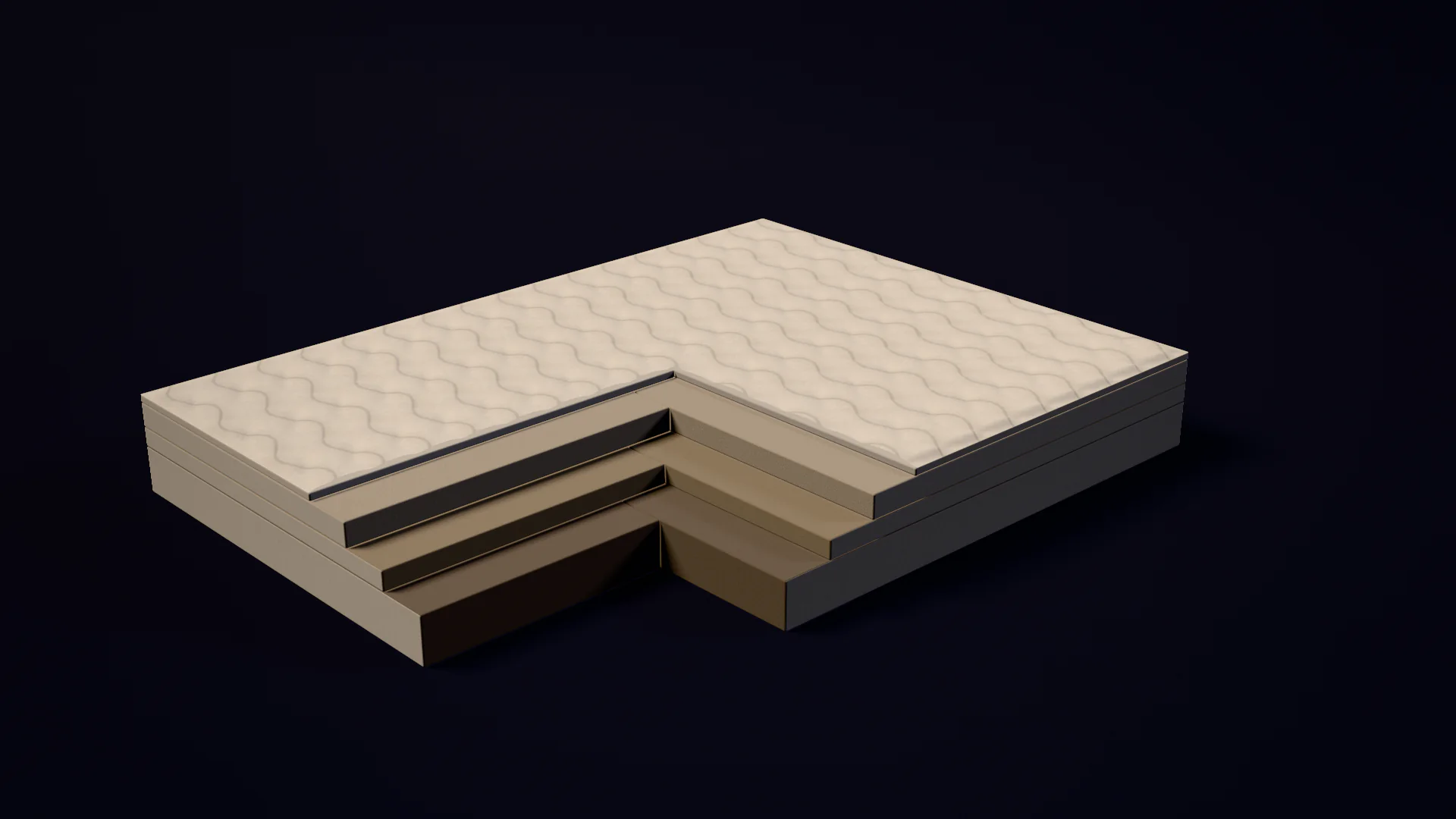
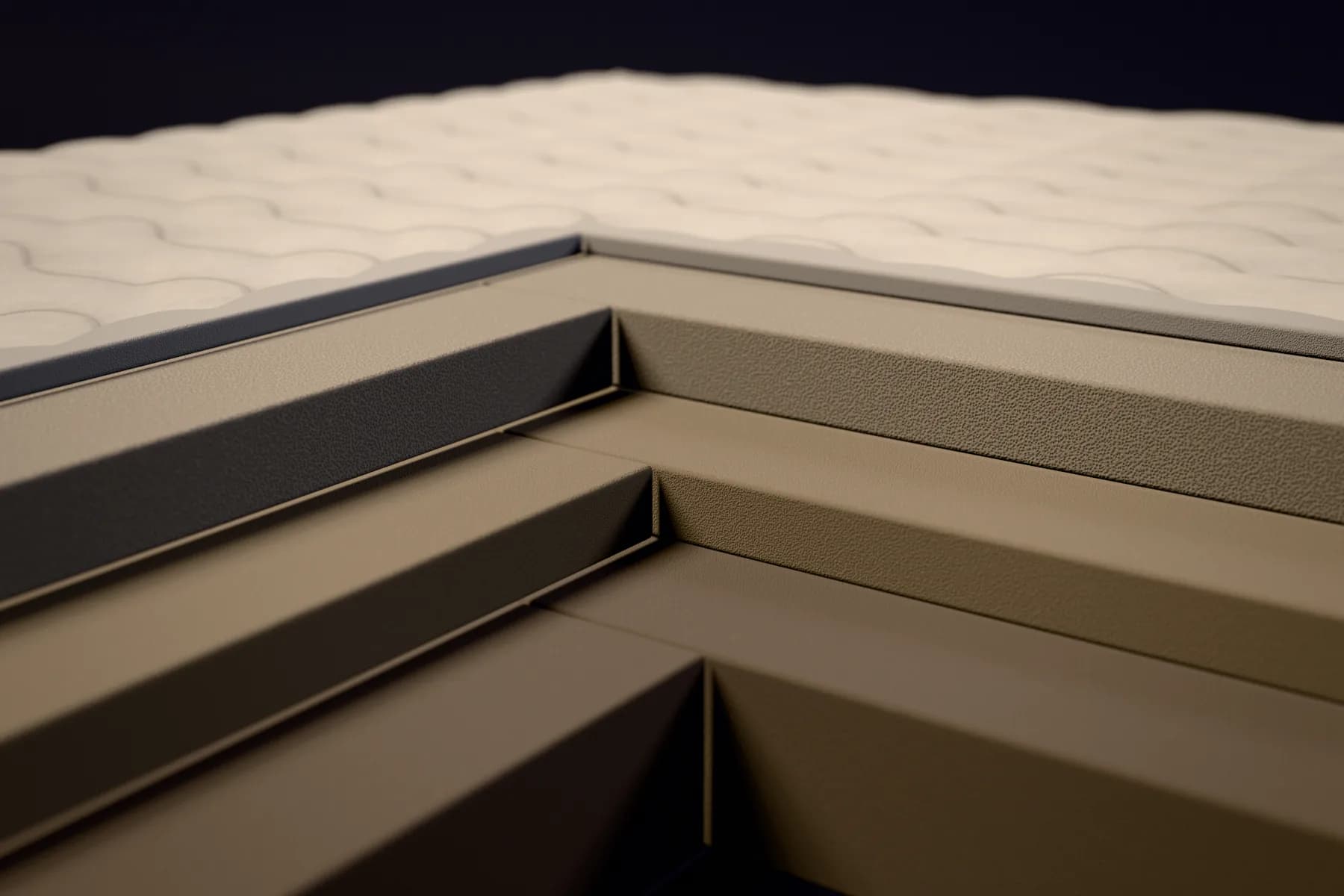
Most mattresses follow the same basic stack: a cover, one or more comfort layers that shape the feel, sometimes a transition layer, and a support core that carries the load. The type is named after that core.
In our current catalog of 37 mattresses, 11 are all-foam, 23 are hybrid, 1 is innerspring and 2 are latex. Hybrid is the largest group.
Look inside a typical hybrid
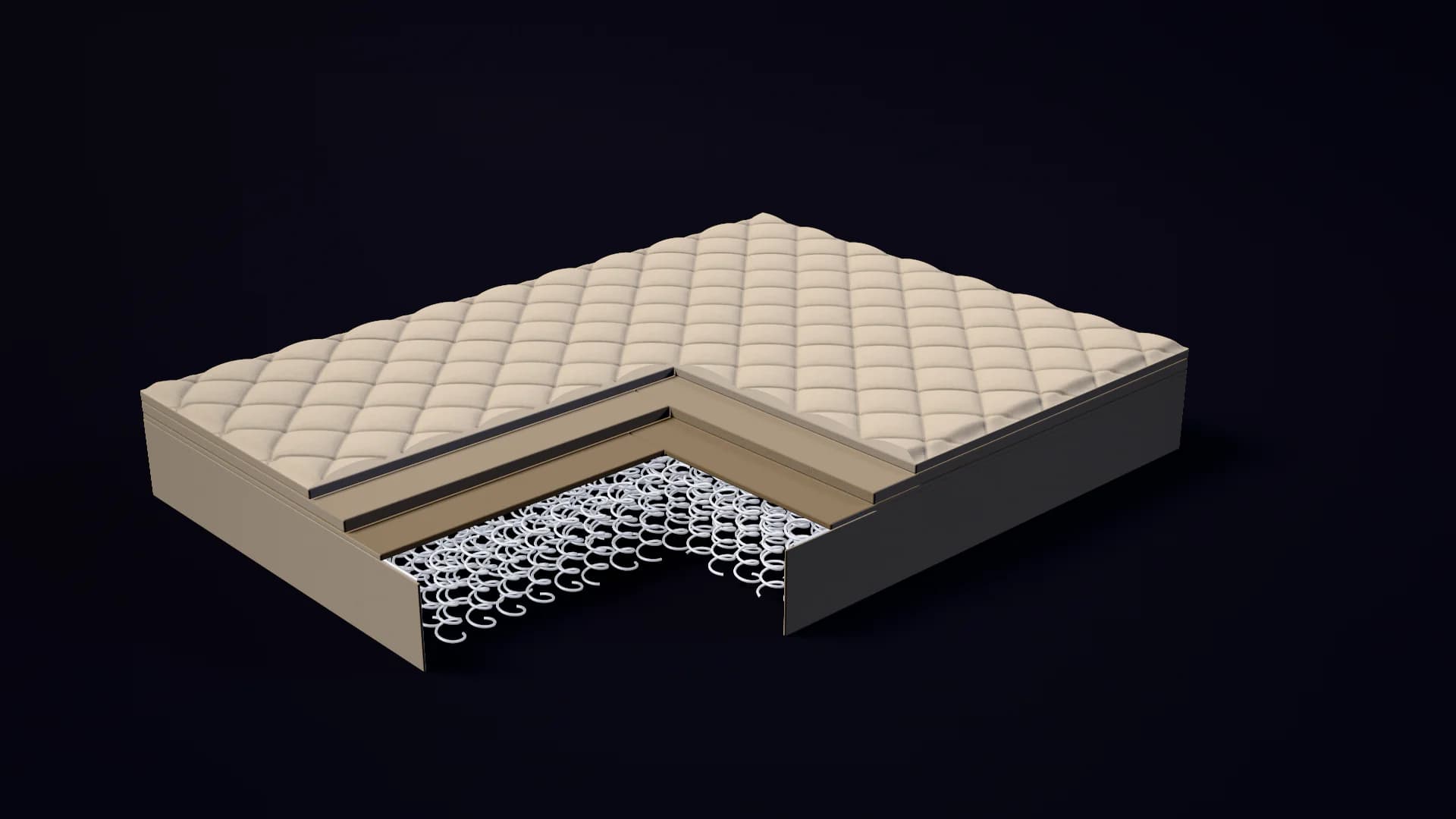
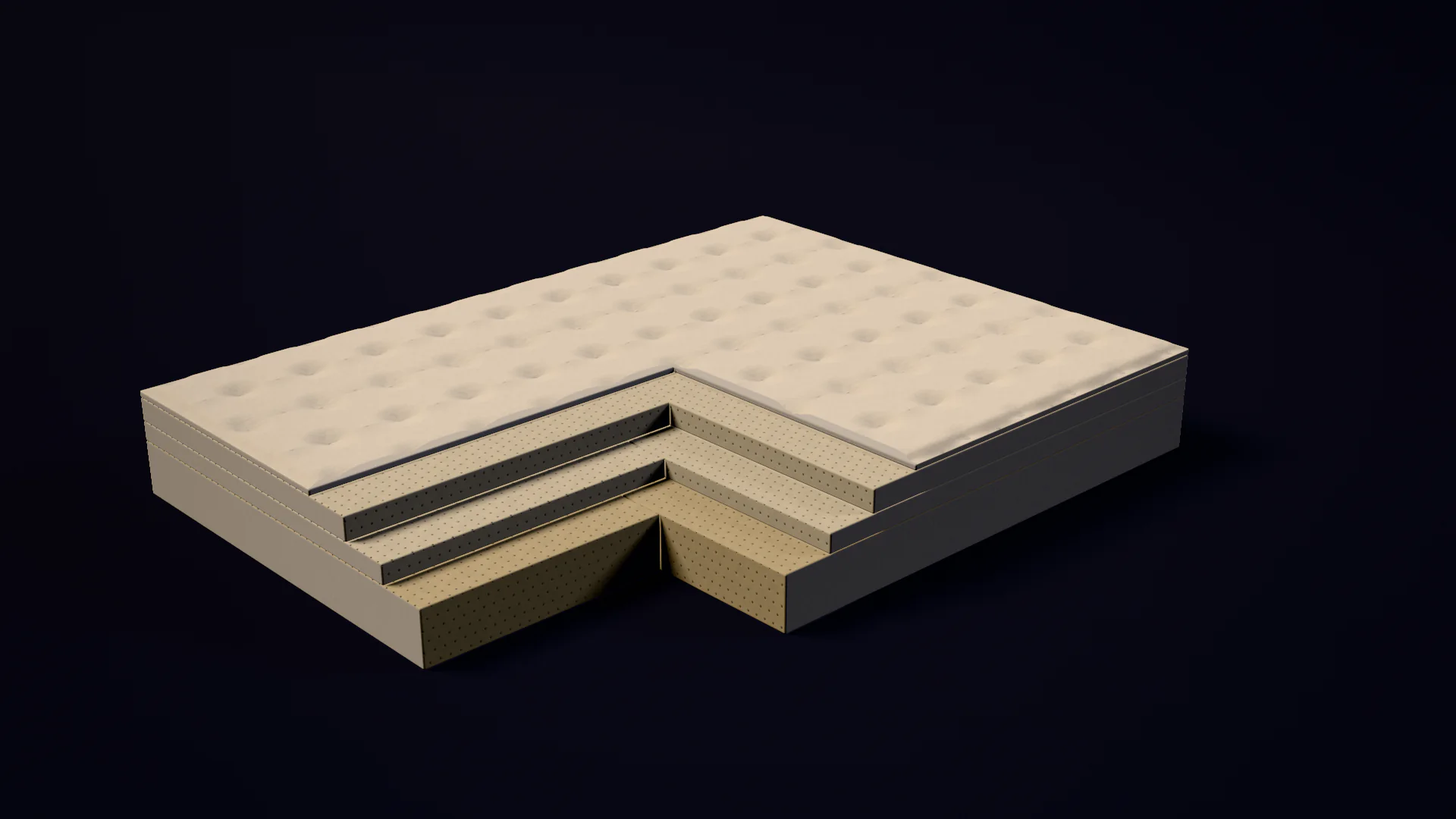
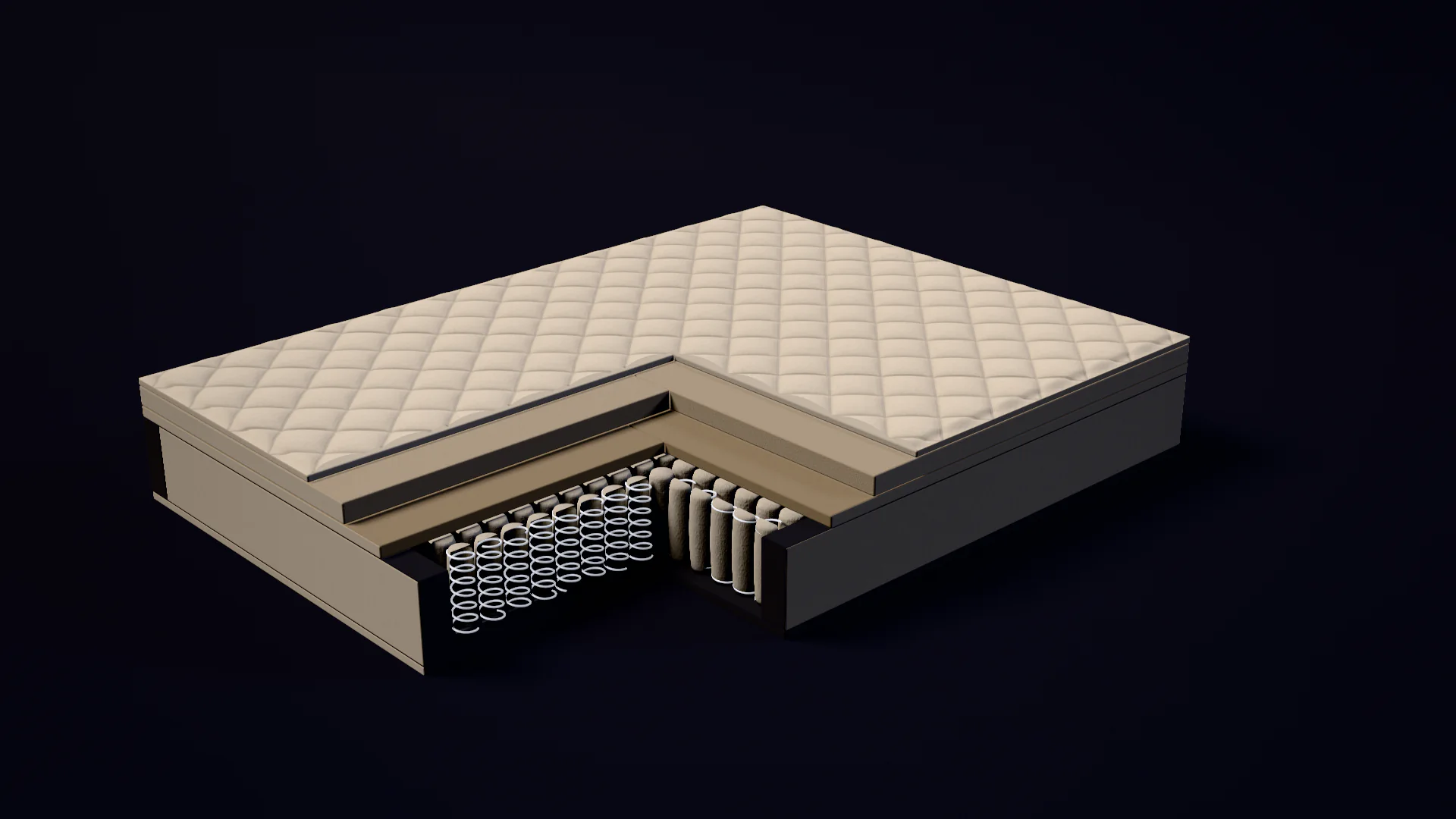
The layers below are a generic hybrid, not any brand’s design. Select a layer to see what it does and how it relates to the way you sleep.
Layers, top to bottom
Choose a layer to see what it does and which parts of the Match Score it drives.
The four types, side by side
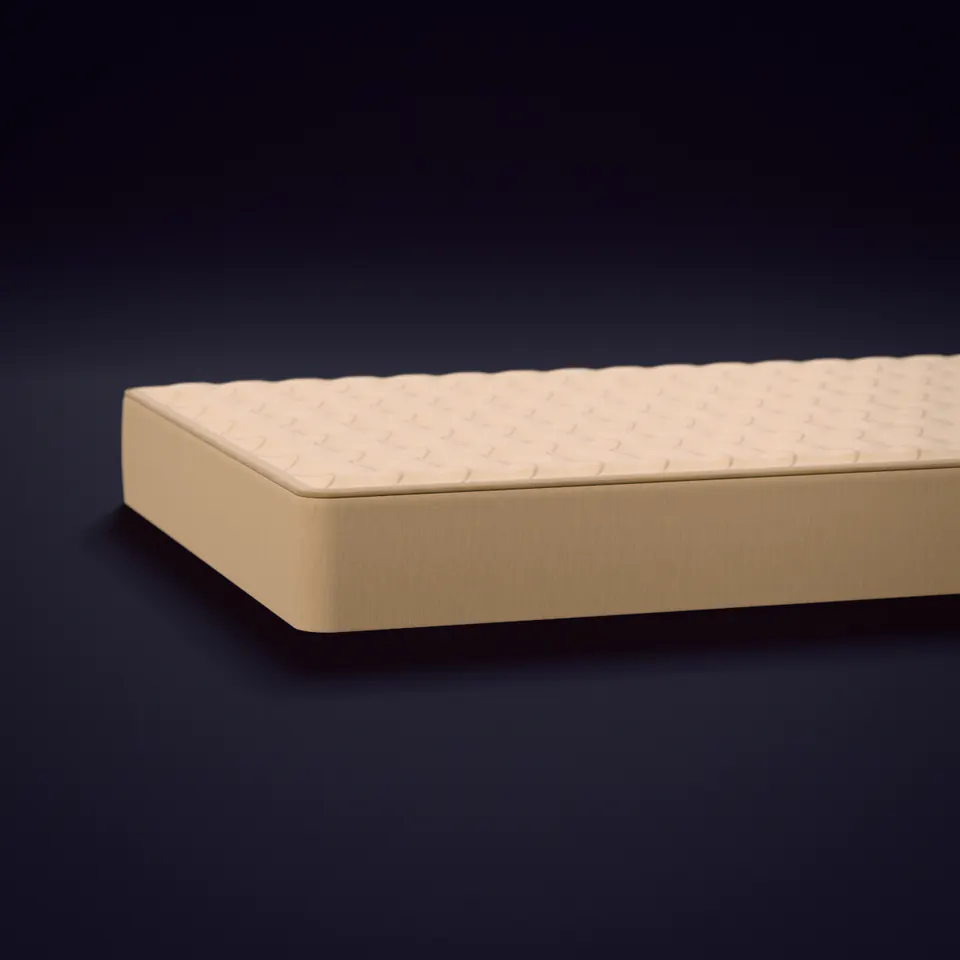
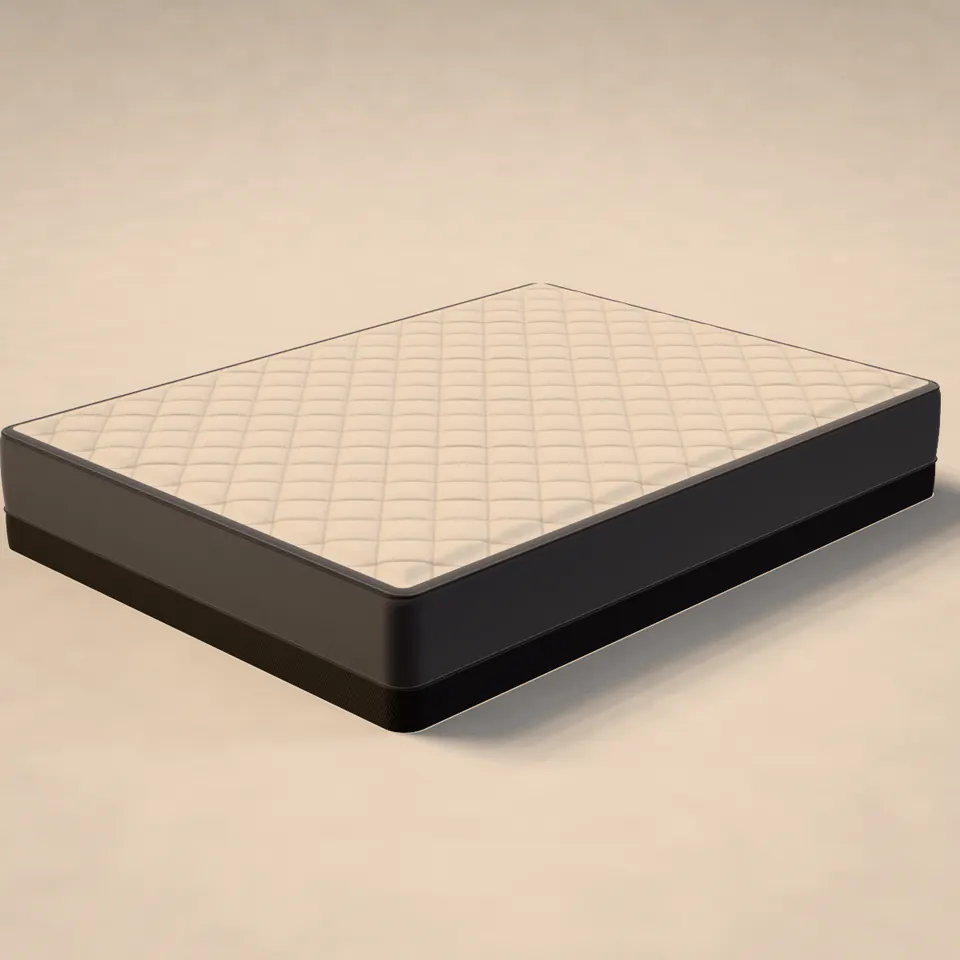
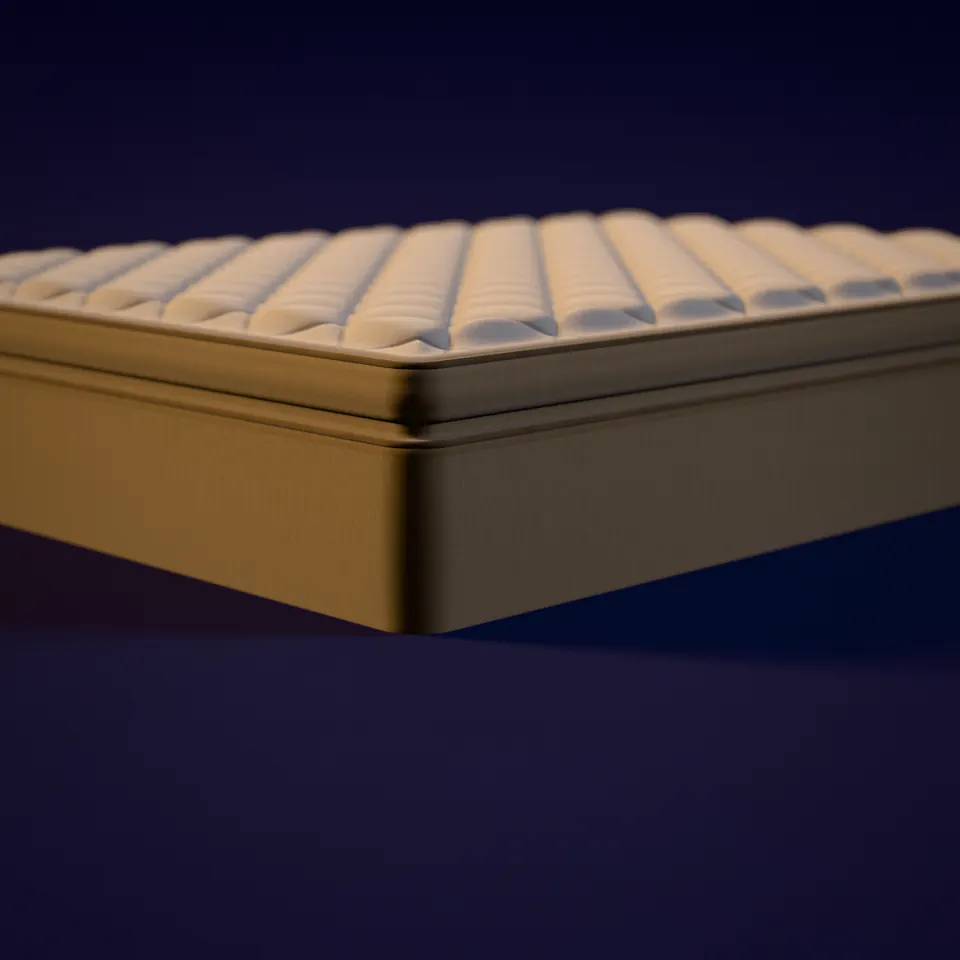
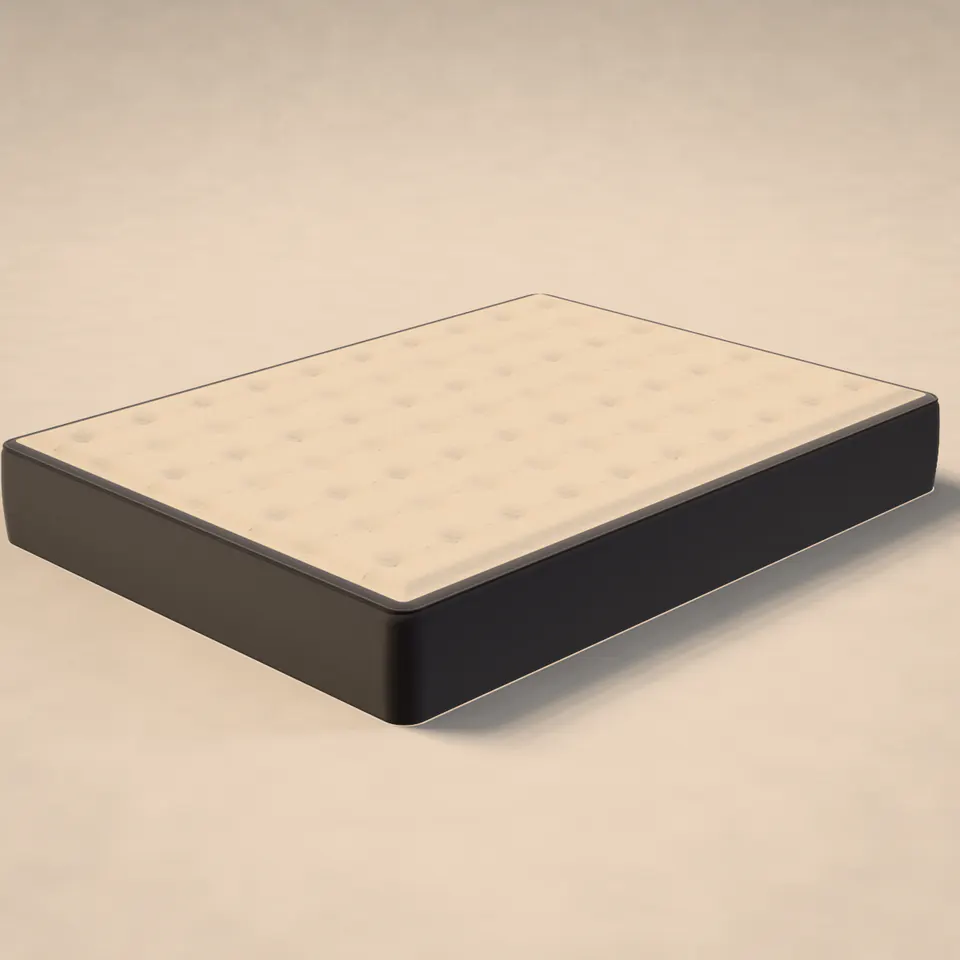
All-foam
Layers of polyurethane foam, often with memory foam near the top, over a dense foam base. Foam contours closely and tends to absorb movement, which suits side sleepers and light-sleeping couples. Dense foam has no open channel for air, so some all-foam mattresses hold more heat, and the edges are usually softer than on a coil mattress.
Hybrid
Foam or latex comfort layers over a core of individually pocketed coils. Hybrids try to combine contouring on top with the bounce, airflow and edge firmness of coils below. That balance is why they suit a wide range of sleepers, but the comfort layers vary a lot: a hybrid with a thin top can feel closer to an innerspring.
Innerspring
A coil unit with a comparatively thin comfort layer. Innersprings tend to feel bouncy and sleep cool, and their perimeter is usually firm. With less foam on top they cushion less, and connected coil designs tend to carry motion across the bed.
Latex
Latex foam, natural or synthetic, in the comfort layers or throughout. Latex is springy rather than slow, so you sit on top of it more than in it, and it has a reputation for keeping its shape. Its exact feel depends heavily on how it is made and layered.
How type affects the Match Score
The engine prefers evidence over assumptions. Cooling, motion isolation, edge support and durability come from independent review ratings when the catalog has one. Support and pressure relief are calculated from the mattress’s firmness against your comfort window, with a small adjustment for the type of core.
When a rating is missing, the engine falls back to a construction-type assumption and marks that dimension Estimated in your results. These assumptions are capped at 6.5/10, so a guess never beats a mattress that was actually rated as average or better:
| Dimension | All-foam | Hybrid | Innerspring | Latex |
|---|---|---|---|---|
| Pressure relief | 6.5 (from 9) | 6.5 (from 7) | 4 | 6.5 (from 8) |
| Support & alignment | 6 | 6.5 (from 8) | 6.5 (from 7) | 6.5 (from 8) |
| Cooling | 4 | 6.5 (from 7) | 6.5 (from 8) | 6 |
| Motion isolation | 6.5 (from 9) | 6.5 (from 7) | 4 | 6 |
| Edge support | 5 | 6.5 (from 7) | 6.5 (from 8) | 6 |
| Durability | 6 | 6.5 (from 7) | 6 | 6.5 (from 9) |
The table shows the tendencies described above in numbers: foam high on motion, low on cooling and edge; innerspring the reverse. You will only ever see these values for a dimension that has no rating. The full rule set is on How It Works.
Choosing between them
Start from what you need rather than the type. If you sleep hot, look at cooling ratings first and treat construction as a hint (our guide for hot sleepers goes further). If a partner’s movement wakes you, look at motion isolation ratings. If you sit on the edge of the bed every morning, read our edge support guide.
Then check firmness against your window. A well-chosen type at the wrong firmness is still the wrong mattress.