Type and material are different questions
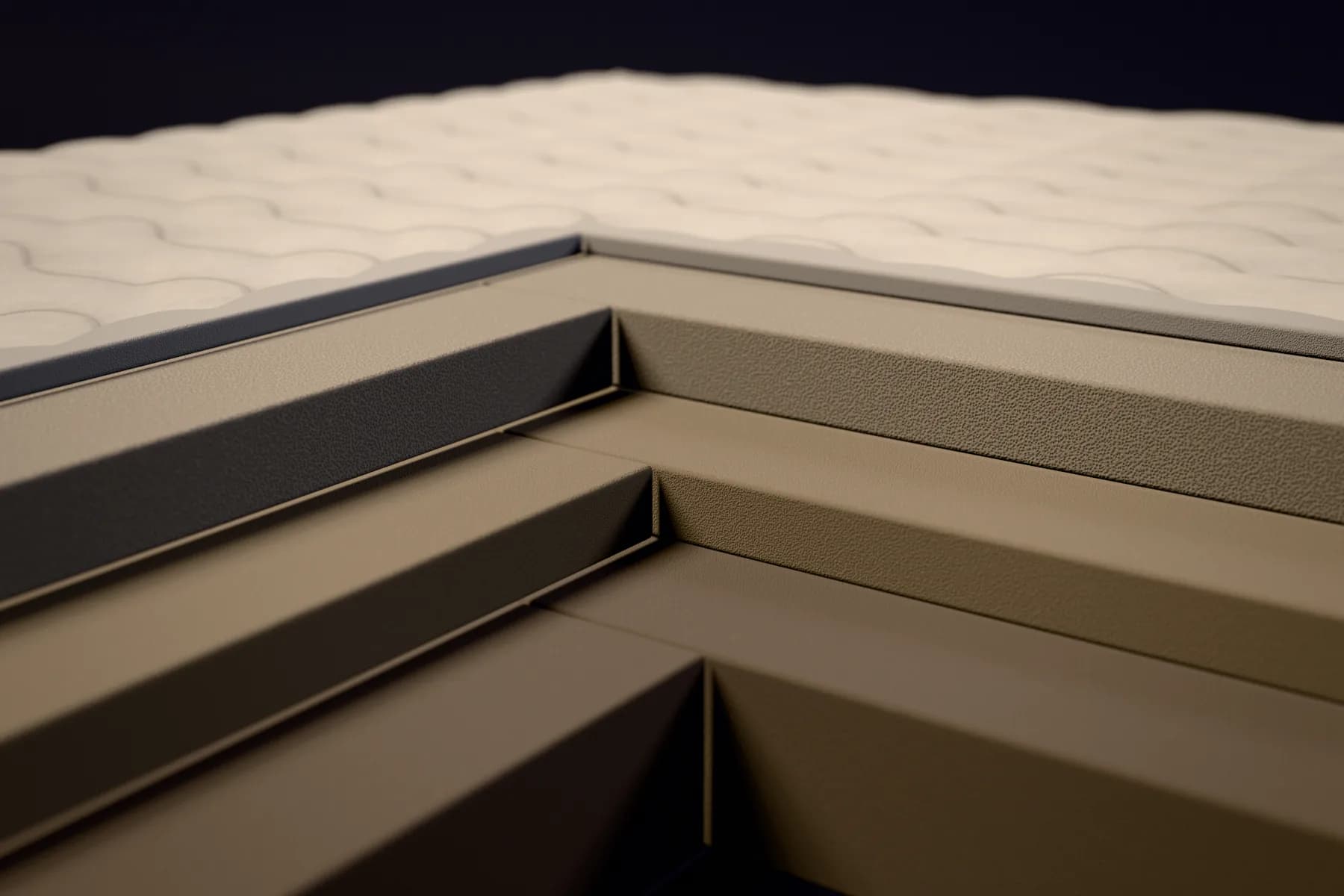
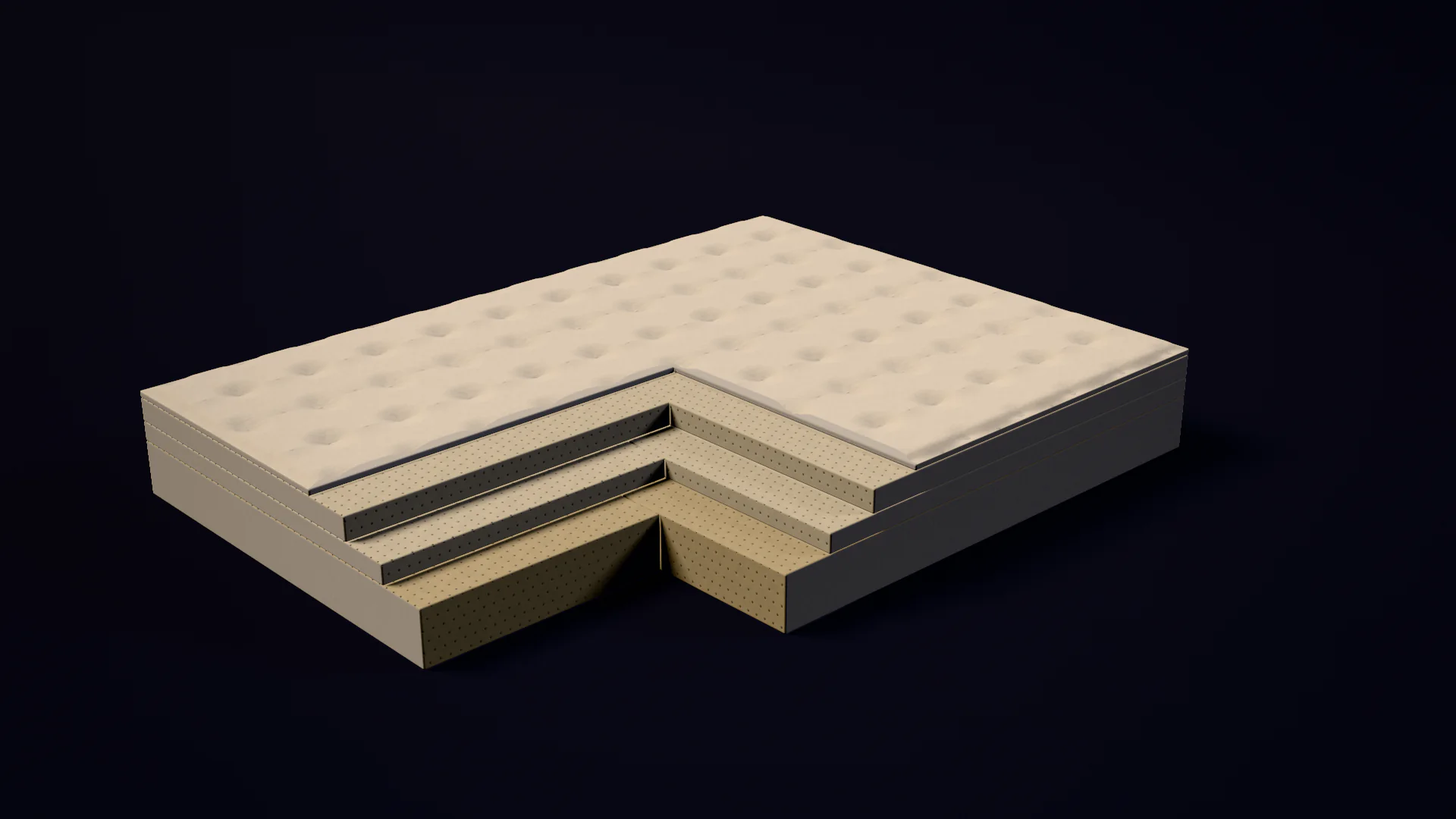
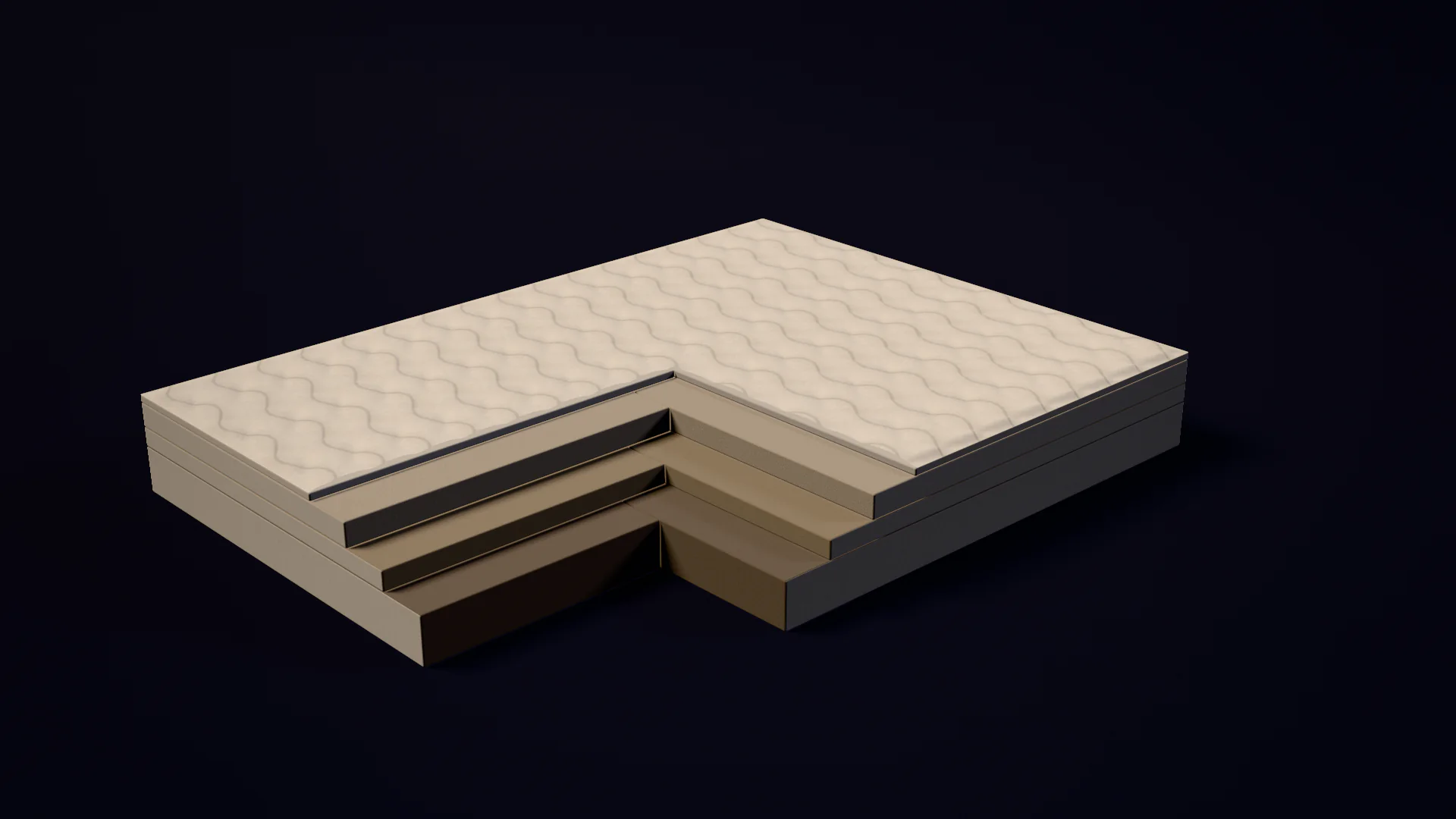
“Hybrid” or “all-foam” tells you what carries the load at the bottom of the mattress. It does not tell you what you lie on. Two hybrids can feel completely different because one puts thick memory foam over the coils and the other puts a thin layer of latex there.
That is why it is worth reading the layer list. Our guide to mattress types covers the four constructions. This one covers the materials inside them.
The same weight, three materials
The quickest way to tell the materials apart is how each one responds to weight and how it behaves when the weight moves.
Memory foam
Memory foam is viscoelastic polyurethane foam. It was first designed in the 1960s for NASA spacecraft seating and moved into mattresses in the 1990s. It softens as it warms, so it slowly molds to your shape and then takes a moment to recover when you move.
That slow, close contour is why memory foam is good at relieving pressure at the shoulders and hips and at absorbing a partner’s movement. It is also why some people feel “stuck” in it, and why dense memory foam can hold heat near your body. Open-cell foams, gel and copper infusions are all attempts to reduce that heat, and how much they help varies from mattress to mattress.
Density, in pounds per cubic foot, is the best single clue to quality. Denser foam tends to keep its shape longer but also tends to hold more heat.
Polyfoam
Conventional polyurethane foam, usually called polyfoam, is commonly used for the base of all-foam mattresses, for the transition layers of hybrids and in many comfort layers. Brands often give it their own names, such as “support foam”, “responsive foam” or “base foam”.
Polyfoam responds faster than memory foam and contours less. Like memory foam, how long it keeps its shape depends on its density, which brands do not always publish.
Latex
Natural latex is made from the sap of rubber trees; synthetic and blended latex also exist, and product pages usually say which they use. Latex is springy rather than slow: it gives under pressure and pushes back straight away, so you lie more on top of it than in it.
There are two common ways to make it. Dunlop latex is denser and is often used in support layers; Talalay latex is lighter and more breathable and is favored for comfort layers. Both have a reputation for durability, with Dunlop generally considered the more durable of the two.
If you have a latex allergy, ask the brand how the latex is covered and talk to your doctor before buying.
Coils
Coils come in four main designs:
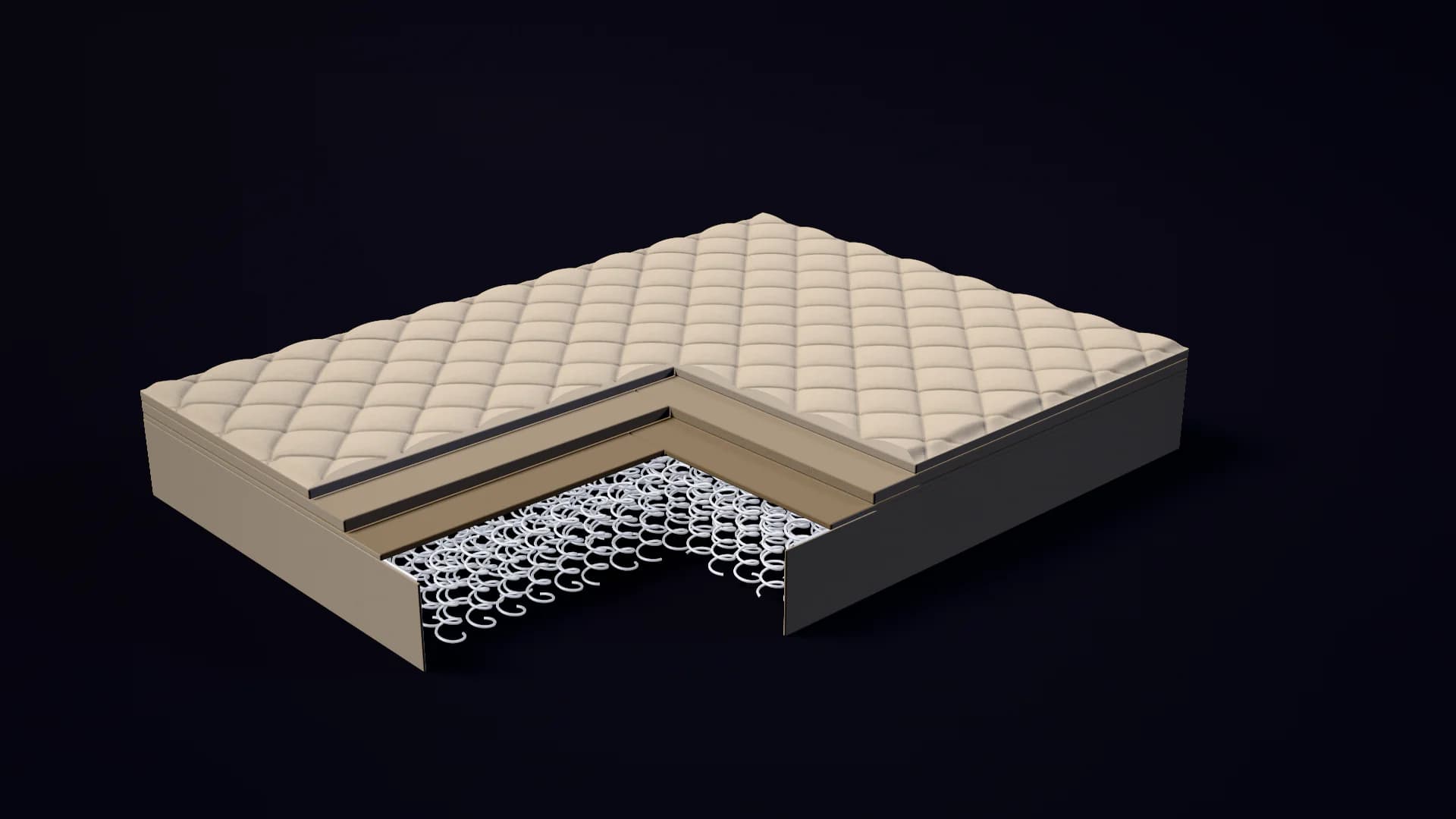
- Bonnell coils are hourglass-shaped and wired together, so they move as a unit and tend to carry motion and noise.
- Offset coils are linked too, but hinge so they respond to movement with less transfer.
- Continuous wire coils are formed from one long wire and can still carry some movement.
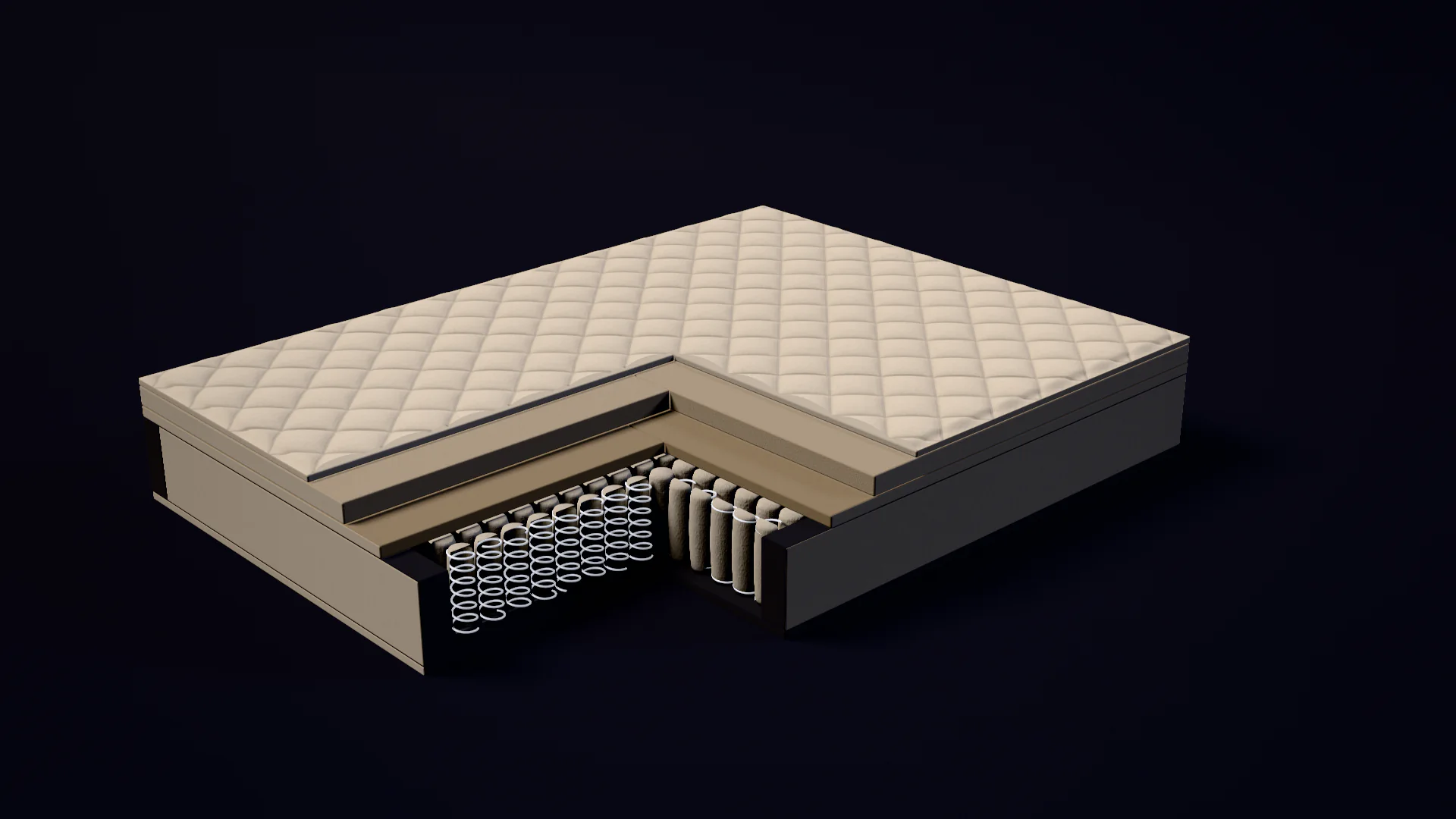
- Pocketed coils are wrapped individually in fabric, so each one moves only when it is pressed. They are what most hybrids use.
Wire thickness is given as a gauge, usually between 13 and 17. A lower number means thicker wire, which feels firmer and tends to last longer. Whatever the design, a coil core is mostly open space, which is why coil mattresses tend to sleep cooler than all-foam ones.
Materials in our catalog
Of the 37 mattresses in our catalog, 37 have a recorded layer description. This is how many of those descriptions name each material. A mattress usually names several, so the rows overlap.
| Material named | Mattresses | Browse |
|---|---|---|
| Memory foam | 19 of 37 | Memory foam mattresses |
| Latex | 8 of 37 | Mattresses with latex |
| Coils or springs | 25 of 37 | Hybrid mattresses |
| A polymer grid | 6 of 37 | No dedicated list |
Counts come from the words in each description, not from lab analysis. A description that says “proprietary foam” without naming the type is not counted as memory foam, even if it is one.
How to read a layer list
- Read it from the top. The first few inches decide the feel: memory foam on top means a slower, closer contour; latex or polyfoam means more bounce.
- Look for thickness. A thin memory foam layer over coils feels very different from several inches of it.
- Find the core. Pocketed coils suggest better motion isolation and airflow than linked coils or a dense foam base.
- Treat brand names with care. “Proprietary” or trademarked foam names describe a product, not a material type. If it matters to you, ask the brand what the foam is and its density.
- Check certifications on the brand’s own page. Labels such as CertiPUR-US for foam or GOLS for organic latex are claims you can look up with the certifier.
How materials reach the Match Score
They mostly do not, and that is deliberate. Material names are marketing as often as they are specification, so the engine scores what it can check: construction type, stated firmness and independent ratings for cooling, motion isolation, edge support and durability.
Foam density is the one material figure the engine can use. If the top foam is below 1.8 lb/ft³ and you weigh 200 lb or more, durability loses 2 points. No mattress in the catalog has a top-foam density on file yet, so today that check never fires. Some brands print densities in their layer lists; we have not yet recorded them as a field.
The full rule set is on How It Works.